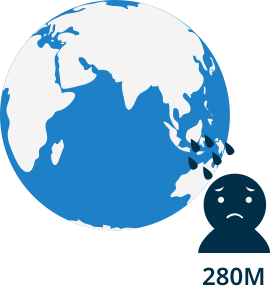
Depression refers to a group of mood disorders characterised by inability to feel pleasure in things once enjoyed, low mood and a range of associated emotional, cognitive, physical, and behavioural symptoms that are severe and persistent enough to interfere with personal and social functioning1,2, leading to reduced quality of life.
Sometimes, depression is also categorised according to causes, e.g. postpartum depression, seasonal affective disorder, premenstrual dysphoric disorder, or drug-induced depression.


Major depressive disorder (MDD) is a clinical diagnosis in which patients experience a depressed mood (or irritable mood in children) and/or an inability to find pleasure in activities once enjoyed, for a period of more than two weeks. In addition, they exhibit at least three of the following symptoms: weight changes, appetite changes, abnormal sleep, psychomotor agitation or retardation, worthlessness or guilt, fatigue, poor concentration, and/or suicidal ideation. The presence of five or more of these symptoms, of which at least one must be a depressed mood or inability to find pleasure, is required for a diagnosis of MDD1.
Dysthymia refers to a persistent type of depression that lasts for at least two years. To be diagnosed with dysthymia, patients should experience at least two of the MDD symptoms and have intermittent gaps between depressive episodes which last no longer than two months1.
Although antidepressants are available as standard treatment, more than half of patients do not respond to initial antidepressant medication. Furthermore, a significant number remain non-responsive to subsequent lines of treatment, leading to Treatment-resistant Depression (TRD). To date, although the definitions of TRD vary between studies, the most used definition was introduced by the United States Food and Drug Administration (FDA) and the European Medicines Agency (EMA), which define TRD as the failure to respond to at least two trials of different antidepressant regimens following adequate doses, duration, and adherence3.